

Ideal weight calculator
There's no single perfect weight, just a healthy range that fits your height. This tool shows the range of kilos considered healthy for your height, and shows two classic formulas for comparison that each give a single number. Wondering if medically supervised weight loss fits your situation? Take the free check.
- Healthy weight range
- 18.5 to 24.9 × (height in m)²
What a healthy weight is
A healthy weight isn't a single number, it's a range. That range comes from the World Health Organization's BMI scale: at a BMI between 18.5 and 24.9, the health risk associated with weight is lowest. Enter your height, and the tool converts that BMI range into the kilos that go with it.
This range says something about the odds of weight-related health issues at a population level, not about how healthy you personally are. Muscle mass, body build and where fat sits on your body don't factor into the number. Someone with a lot of muscle can land above the range without carrying excess fat, someone with little muscle can sit right in the middle and still have an elevated body fat percentage.
A single number suggests a precision that isn't really there. A range makes it clearer that there's room within what counts as healthy, so a difference of a few kilos doesn't feel like getting it 'wrong'.
The classic formulas and their limits
Alongside the healthy range, we show two classic formulas: Devine's (1974) and Robinson's (1983). Both calculate one fixed weight based on height and sex, originally developed to calculate medication dosing for people with an average build, not to define what's healthy.
That makes them less suited as a target to work toward. They don't account for muscle mass, body build or age, and give a single number where in reality a whole range can be healthy. We show them for comparison against the healthy range above, not as a number to hit exactly.
Devine and Robinson often give a slightly different number for the same height, simply because they're different mathematical approximations of the same idea. That difference is itself a sign that no exact 'ideal' exists.
Why ideal weight is personal
If you fall far outside the healthy range, that range itself isn't a realistic target for tomorrow. At a significantly higher weight, the first step isn't 'straight to the middle of the range', it's a change that's achievable and that you can sustain long term.
Research shows that losing just 5 to 15 percent of your body weight already delivers major health gains: lower blood pressure, better blood sugar levels, fewer joint complaints and a lower risk of cardiovascular disease. That holds even if you haven't reached the 18.5-24.9 BMI range yet. Health gains start with the first kilos, not only once you hit a number on a scale.
A good goal weight accounts for where you're starting from, what's achievable, and what you can sustain, not just a formula. At Lean Clinic you work that out together with a doctor, not from a calculator alone.
When to be concerned
If you fall well below the healthy range, that can point to being underweight, with risks like a weakened immune system, persistent fatigue, and in women a disrupted cycle. If that persists for a while without a clear reason, discuss it with your doctor.
If you fall well above the healthy range, the risk of things like type 2 diabetes, cardiovascular disease and joint complaints rises as the gap grows. That risk doesn't just depend on the number on the scale, it also depends on where the fat sits: fat around the waist counts more heavily than fat elsewhere.
Wondering if your weight carries a health risk, or want guided support setting a realistic goal weight? A doctor and coach can look at the next step together with you.
Take the free checkGeneral information
about GLP-1 medication.
Below you'll find an overview of the best-known GLP-1 medications. This is general, informational content. Which medication, dosage or treatment is right for you is always determined by a doctor during a personal intake, alongside lifestyle guidance.
Semaglutide at a higher dose, specifically registered for weight management in adults with overweight or obesity.
- Active ingredient
- Semaglutide, a GLP-1 receptor agonist at a higher dose.
- Usage
- Once a week via a subcutaneous injection using a specially designed pen.
- Target group
- For people with obesity (BMI ≥30) or overweight (BMI ≥27) with weight-related conditions.
- How it works
- Mimics the natural GLP-1 hormone, reduces appetite, slows gastric emptying and improves satiety.
- Potential weight loss
- An average of 16.9% in clinical research after 68 weeks, at the highest dose.
- Side effects
- Mainly nausea, gastrointestinal complaints and fatigue. These usually decrease over time.
This medication is available on prescription only and should be used under professional medical supervision. A personal screening and regular check-ins are essential for safe and effective treatment. This medication is not covered by health insurance.
Everything you want to know
about a healthy weight.
- How do you calculate a healthy weight?
- A healthy weight is usually calculated using the BMI range of 18.5 to 24.9, multiplied by your height squared. Enter your height in the calculator above for the range that fits you.
- What's my ideal weight?
- There's no single exact ideal weight, just a healthy range based on your height, and two classic formulas (Devine and Robinson) that give a single number for comparison. Calculate your range above.
- How much should I weigh for my height?
- That depends on more than height alone, like muscle mass and body build, but the healthy BMI range gives a solid first indication. Enter your height to see which kilos that means for you.
- Is losing 5 to 15 percent enough for health gains?
- Yes, research shows that losing just 5 to 15 percent of your body weight already delivers clear health gains, even if you haven't reached the healthy BMI range yet. If it doesn't work on your own, medical guidance can help.
- What's the difference between ideal weight and a healthy weight?
- Ideal weight suggests one exact number, a healthy weight is a range. For the full picture, also calculate your BMI, that number belongs to the same range.
Blog about medical weight loss
Read our articles about medical weight loss, lifestyle, nutrition, medication, obesity, exercise and healthy living.
Wegovy pil goedgekeurd in Europa: de eerste GLP-1 pil voor gewichtsbeheersing
De Europese Commissie heeft de Wegovy pil goedgekeurd als eerste GLP-1 pil voor gewichtsbeheersing in de EU. Wat is er precies goedgekeurd en wanneer komt de pil naar Nederland?

Orforglipron (Foundayo): wat de GLP-1-pil kan en wanneer hij hier is
De FDA keurde orforglipron op 1 april 2026 goed als Foundayo, de eerste GLP-1-pil zonder eet- of drinkvoorschriften. Wat de ATTAIN-studies laten zien, welke bijwerkingen erbij horen en wanneer het middel in Nederland te verwachten is.
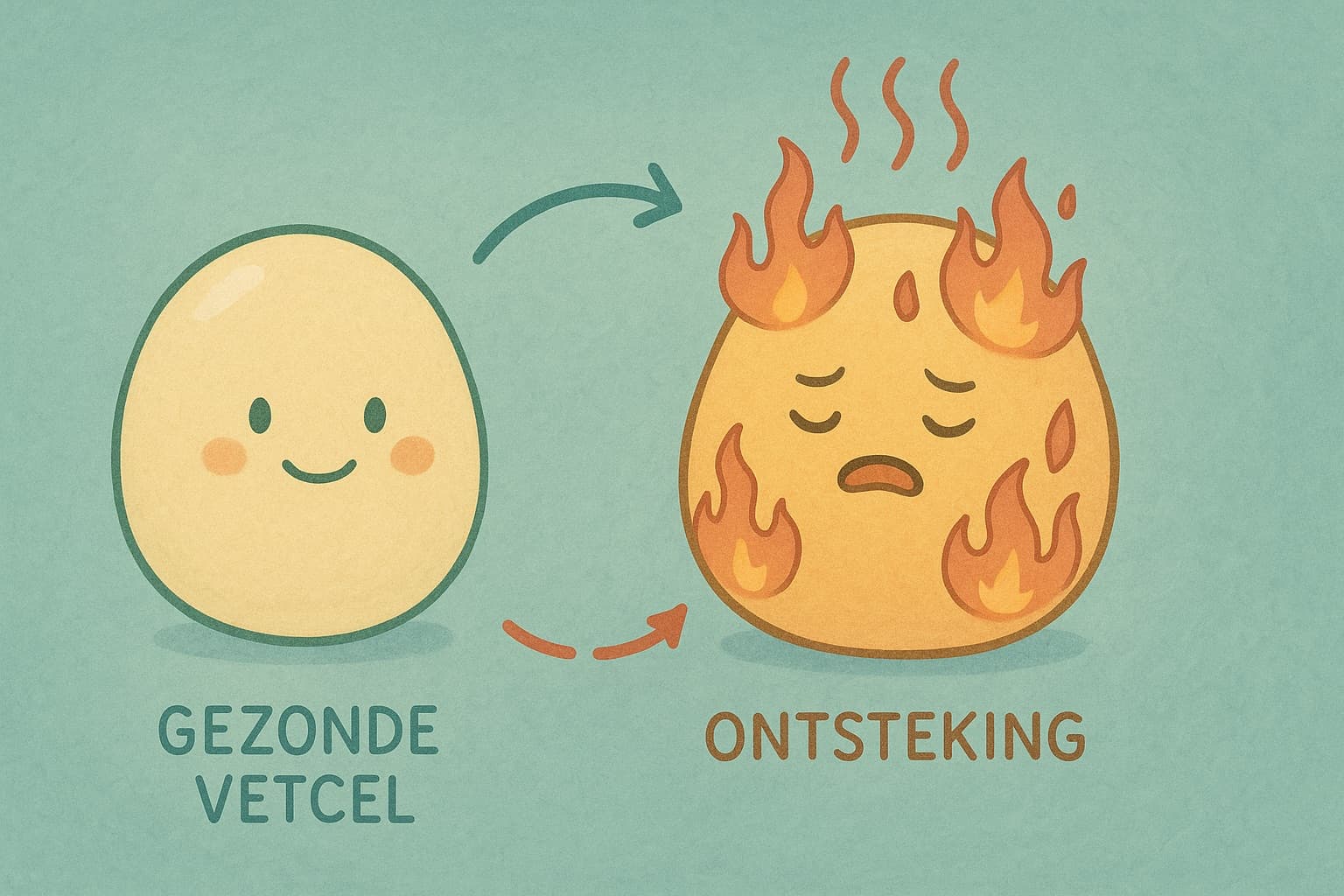
Ontsteking en obesitas: waar start de vicieuze cirkel?
Een diepgaande blik op de complexe relatie tussen obesitas en chronische ontsteking, hoe ze elkaar versterken, en hoe leefstijl en nieuwe behandelingen zoals GLP-1 medicatie deze cirkel kunnen doorbreken.