

How many kcal do you need per day?
Calculate your TDEE using the science-backed Mifflin-St Jeor formula. A solid starting point, but remember: sustainable weight loss is about habits, not counting.
- Male
- 10 × kg + 6.25 × cm − 5 × age + 5
- Female
- 10 × kg + 6.25 × cm − 5 × age − 161
Where your energy goes
Your total daily energy expenditure is made up of four components. The biggest share, your resting metabolism, happens without you having to do a thing.
- 60%
- Basal metabolic rateBreathing, heart rate, organs at rest
- 15%
- Daily movementWalking, standing, household tasks, taking the stairs
- 15%
- Exercise and trainingWorkouts, running, strength training
- 10%
- DigestionEnergy used to process your food
How we look at it at Lean Clinic
Knowing your calories is useful. Counting them is a different story. For most people, calorie counting works in the short term but becomes a burden over time. That's where the diet mentality creeps in, and that's exactly what we want to move away from.
Our focus is on sustainable habits: enough protein, more whole foods, less ultra-processed food, better sleep, more movement. That tends to work better than weighing every bite. So use this number as a rough guide, not a daily target.
Calorie formulas are estimates with a margin of 10-15%. How much you actually need varies from person to person, and changes as you lose weight, become more active, or get older.
Rules of thumb for men and women.
- Sedentary
- 1800-2000 kcal
- Moderately active
- 2000-2200 kcal
- Very active
- 2200-2400 kcal
Losing weight: often 1400-1600 kcal. Don't go below 1200 kcal on a structural basis.
- Sedentary
- 2200-2400 kcal
- Moderately active
- 2500-2700 kcal
- Very active
- 2800-3200 kcal
Losing weight: often 1700-2000 kcal. Don't go below 1500 kcal on a structural basis.
Are you using GLP-1 medication?
There are a few extra things to keep in mind.
GLP-1 medication naturally reduces your appetite. That's effective, but the risk is that you end up missing out on things your body genuinely needs.
- Enough protein
- Less appetite means it's easier to fall short on protein. Aim for 1.6-2.0 g per kg of body weight to preserve muscle mass.
- Don't eat too little
- Never eat below your BMR on a structural basis. Too few calories slows your metabolism and leads to muscle loss.
- A sustainable pace
- Losing more than 1% of your body weight per week is often too fast. If you're unsure, talk it through with your doctor or coach.
Wondering whether medication is right for your situation? Our doctors assess that during a personal intake, always alongside lifestyle support from a coach.
Find out if you qualifyGeneral information
about GLP-1 medication.
Below you'll find an overview of the best-known GLP-1 medications. This is general, informational content. Which medication, dosage or treatment is right for you is always determined by a doctor during a personal intake, alongside lifestyle guidance.
Semaglutide at a higher dose, specifically registered for weight management in adults with overweight or obesity.
- Active ingredient
- Semaglutide, a GLP-1 receptor agonist at a higher dose.
- Usage
- Once a week via a subcutaneous injection using a specially designed pen.
- Target group
- For people with obesity (BMI ≥30) or overweight (BMI ≥27) with weight-related conditions.
- How it works
- Mimics the natural GLP-1 hormone, reduces appetite, slows gastric emptying and improves satiety.
- Potential weight loss
- An average of 16.9% in clinical research after 68 weeks, at the highest dose.
- Side effects
- Mainly nausea, gastrointestinal complaints and fatigue. These usually decrease over time.
This medication is available on prescription only and should be used under professional medical supervision. A personal screening and regular check-ins are essential for safe and effective treatment. This medication is not covered by health insurance.
The most common questions
about calories and losing weight.
- How many calories do I need per day?
- That depends on your sex, age, height, weight and activity level. The average woman needs 1800-2200 kcal per day, the average man 2200-2800. Use the calculator to find your personal number.
- Do I really need to count calories?
- No. For most people, counting calories works in the short term but not the long term. Sustainable habits, more mindful choices and regular movement are what lead to lasting results.
- What is a safe calorie deficit?
- A deficit of 300 to 500 kcal per day leads to roughly 0.3 to 0.5 kg of weight loss per week. That's safe and easy to maintain. A larger deficit can work short term, but rarely holds up over time.
- Why am I not losing weight despite a deficit?
- Intake is often underestimated and activity overestimated. Fluid fluctuations and hormonal factors can also mask weight loss in the short term. Give it at least 3 to 4 weeks.
- How accurate is this calculator?
- The Mifflin-St Jeor formula is accurate to within ~10% for most people. Your actual burn may vary due to genetics and muscle mass. Think of it as a solid starting point, not an absolute truth.
- What are macronutrients?
- Macronutrients are proteins, carbohydrates and fats. When losing weight, getting enough protein is especially important (1.6-2.0 g per kg of body weight) to preserve muscle mass.
- What's the difference between BMR and TDEE?
- BMR is your resting metabolic rate: the calories you burn without any activity at all. TDEE is your total daily energy expenditure, including movement and exercise. TDEE = BMR × activity factor.
- Does this apply if I'm using GLP-1 medication?
- Yes, but there are a few things to keep in mind. Reduced appetite makes it easy to fall short on protein or overall calories. Losing weight too quickly leads to muscle loss. If you're unsure, check in with your doctor or coach.
Blog about medical weight loss
Read our articles about medical weight loss, lifestyle, nutrition, medication, obesity, exercise and healthy living.
Wegovy pil goedgekeurd in Europa: de eerste GLP-1 pil voor gewichtsbeheersing
De Europese Commissie heeft de Wegovy pil goedgekeurd als eerste GLP-1 pil voor gewichtsbeheersing in de EU. Wat is er precies goedgekeurd en wanneer komt de pil naar Nederland?

Orforglipron (Foundayo): wat de GLP-1-pil kan en wanneer hij hier is
De FDA keurde orforglipron op 1 april 2026 goed als Foundayo, de eerste GLP-1-pil zonder eet- of drinkvoorschriften. Wat de ATTAIN-studies laten zien, welke bijwerkingen erbij horen en wanneer het middel in Nederland te verwachten is.
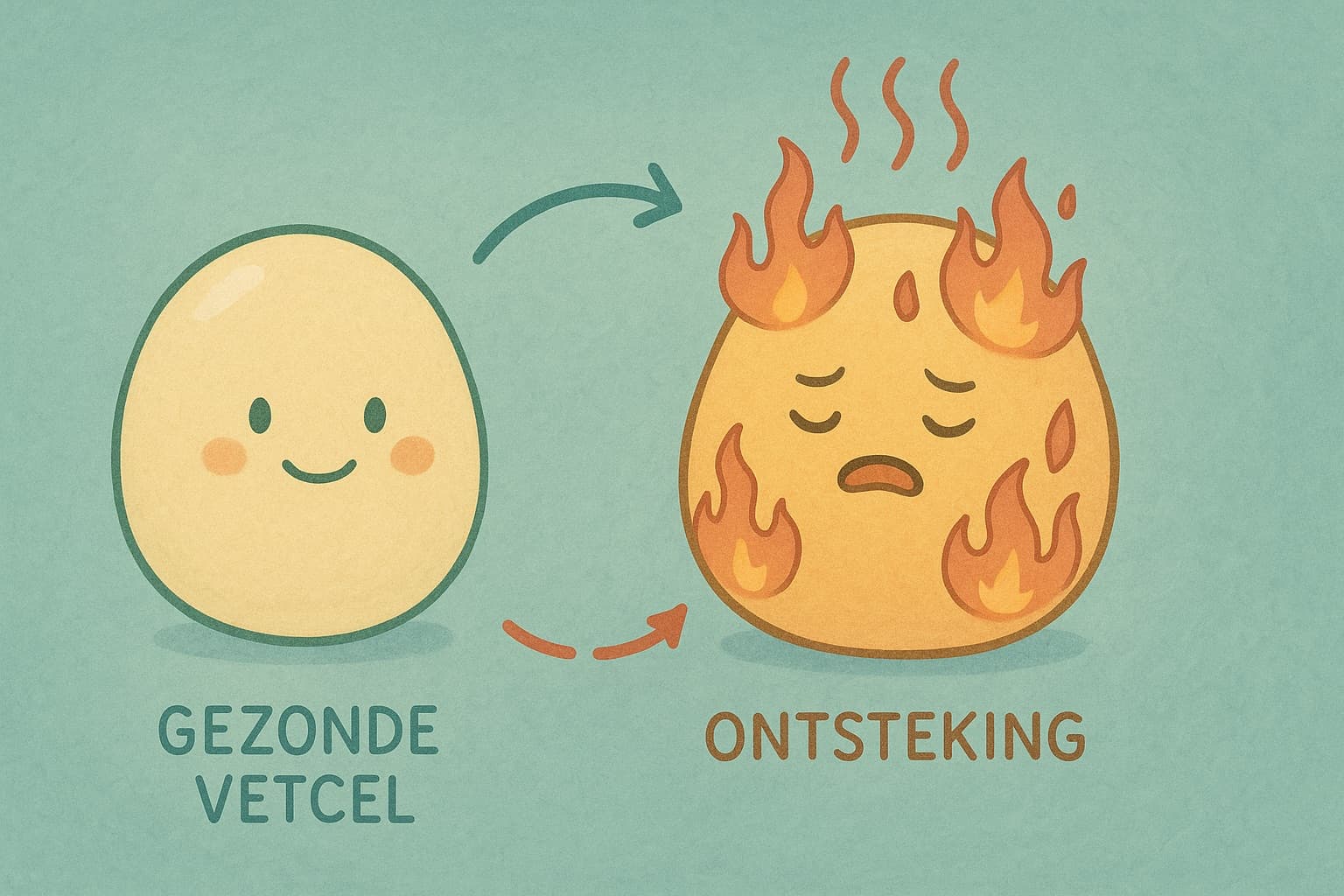
Ontsteking en obesitas: waar start de vicieuze cirkel?
Een diepgaande blik op de complexe relatie tussen obesitas en chronische ontsteking, hoe ze elkaar versterken, en hoe leefstijl en nieuwe behandelingen zoals GLP-1 medicatie deze cirkel kunnen doorbreken.