

Calculate your macros
Calories decide whether you gain or lose weight, but the split between protein, fat and carbs decides how that journey feels: how full you are, how much muscle you keep, and how sustainable it is. Calculate your macros below based on your calorie target and goal. Not sure whether counting macros alone is enough? Take the free assessment.
- Kcal per gram
- Protein 4 · carbs 4 · fat 9
Enter your height for a more precise protein target at a higher bodyweight.
What are macros, and why does the split matter?
Macros, short for macronutrients, are the three building blocks all food is made of: protein, fat and carbohydrates. Together they make up the calories you eat, but each does something different in your body. Protein supplies the building blocks for muscle tissue and keeps you full for longer. Fat is needed for hormone production and absorbing certain vitamins. Carbohydrates are your fastest energy source, especially useful around exercise.
Two people with exactly the same calorie target can get very different results, depending on how they split those calories. Too little protein during a calorie deficit means a higher chance of muscle loss. Too little fat can disrupt your hormones. So counting macros refines counting calories, it doesn't replace it.
Macros determine the quality of your result, not whether you gain or lose weight. Don't know your calorie target yet? Work it out first with the calorie needs tool.
How much protein, fat and carbs do you need per day?
Guidelines per macro, in grams per kilogram of bodyweight and percentage of your calories
For protein and fat there are evidence-based rules of thumb; carbs simply fill the rest of your calorie target. This calculator applies that automatically based on your weight, goal and calorie target.
- Protein
- g per kg of bodyweight, depending on your goal
- 1.6 - 2.2
- Fat
- % of your calories, with a floor of 0.6 g/kg
- 25 - 30
- Carbs
- of your calorie target, after protein and fat
- Remainder
This protein guideline is the same one our protein needs tool uses: both calculators give the same outcome for the same weight and goal.
Below 0.6 g of fat per kg of bodyweight you risk an essential fatty acid shortfall and disrupted hormone production, even if your calorie deficit would technically allow it. This calculator never goes below that floor, whatever your calorie target.
Calculating carbs: the difference between weight loss and muscle gain
You don't calculate carbs on their own, they're whatever is left once protein and fat are filled in. That means your goal indirectly decides how many carbs you get. When losing weight your calorie target is lower and your protein percentage relatively higher, so proportionally less room is left for carbs. That's not a problem: carbs aren't strictly needed in large amounts, they matter most around training.
For muscle gain it works the other way round. Your calorie target sits higher, usually just above maintenance, and those extra calories mostly arrive as carbs. That gives you the energy for harder training sessions and helps with recovery. Protein stays high either way, since both preserving muscle in a deficit and building muscle in a surplus need enough building blocks.
The bigger your calorie deficit or surplus, the more it matters to keep protein steady. Carbs and fat are easier to shift around, depending on what's most enjoyable to eat for you.
Common mistakes when counting macros
The most common mistake is eating too little protein, especially during a calorie deficit. People focus on the total calorie count and forget that a deficit without enough protein leads to muscle loss faster than to fat loss. A second mistake is cutting fat entirely to make room for more carbs or protein: that works short term, but undermines your hormones and energy levels over time.
A third mistake is dropping carbs altogether without a medical reason. For most people that's unnecessarily strict and hard to sustain. Finally: chasing macros down to the exact gram costs more effort than it's worth. A guideline of plus or minus 10 grams per macro is plenty, precision beyond that won't noticeably change your result.
Macros are a tool, not a goal in themselves. Not sure your current approach is working, or want to lose weight under medical guidance? A doctor and coach are happy to help you figure out the next step.
Take the free assessmentGeneral information
about GLP-1 medication.
Below you'll find an overview of the best-known GLP-1 medications. This is general, informational content. Which medication, dosage or treatment is right for you is always determined by a doctor during a personal intake, alongside lifestyle guidance.
Semaglutide at a higher dose, specifically registered for weight management in adults with overweight or obesity.
- Active ingredient
- Semaglutide, a GLP-1 receptor agonist at a higher dose.
- Usage
- Once a week via a subcutaneous injection using a specially designed pen.
- Target group
- For people with obesity (BMI ≥30) or overweight (BMI ≥27) with weight-related conditions.
- How it works
- Mimics the natural GLP-1 hormone, reduces appetite, slows gastric emptying and improves satiety.
- Potential weight loss
- An average of 16.9% in clinical research after 68 weeks, at the highest dose.
- Side effects
- Mainly nausea, gastrointestinal complaints and fatigue. These usually decrease over time.
This medication is available on prescription only and should be used under professional medical supervision. A personal screening and regular check-ins are essential for safe and effective treatment. This medication is not covered by health insurance.
Everything you want to know
about calculating macros.
- How much protein, fat and carbs do I need per day?
- It depends on your weight, calorie target and goal. Rule of thumb: 1.6 to 2.2 grams of protein per kilogram of bodyweight, 25 to 30 percent of your calories from fat with a floor of 0.6 grams per kilogram, and the rest of your calories as carbs. Calculate your exact numbers above, or check the protein needs tool for more detail.
- How do I calculate my carbs?
- Carbs fill the gap once protein and fat are set: take your calorie target, subtract the calories from protein and fat, then divide the remainder by 4 kilocalories per gram. This calculator does that automatically once you enter your calorie target and goal.
- What's the best macro split to lose weight?
- For weight loss, 1.6 to 2.0 grams of protein per kilogram of bodyweight is recommended to prevent muscle loss, with fat around 25 to 30 percent of your calories and the rest as carbs. Don't know your calorie deficit yet? Calculate it with the calorie deficit tool.
- What's the best macro split for muscle gain?
- For muscle gain, 1.6 to 2.2 grams of protein per kilogram of bodyweight is ideal, combined with a small calorie surplus and relatively more carbs to support training and recovery.
- Should I adjust my macros when taking GLP-1 medication?
- Yes. GLP-1 medication suppresses appetite, so you often eat less and it becomes harder to get enough protein. That makes sufficient protein especially important to prevent muscle loss. Read more about GLP-1 medication and how nutrition fits in.
Blog about medical weight loss
Read our articles about medical weight loss, lifestyle, nutrition, medication, obesity, exercise and healthy living.
Wegovy pil goedgekeurd in Europa: de eerste GLP-1 pil voor gewichtsbeheersing
De Europese Commissie heeft de Wegovy pil goedgekeurd als eerste GLP-1 pil voor gewichtsbeheersing in de EU. Wat is er precies goedgekeurd en wanneer komt de pil naar Nederland?

Orforglipron (Foundayo): wat de GLP-1-pil kan en wanneer hij hier is
De FDA keurde orforglipron op 1 april 2026 goed als Foundayo, de eerste GLP-1-pil zonder eet- of drinkvoorschriften. Wat de ATTAIN-studies laten zien, welke bijwerkingen erbij horen en wanneer het middel in Nederland te verwachten is.
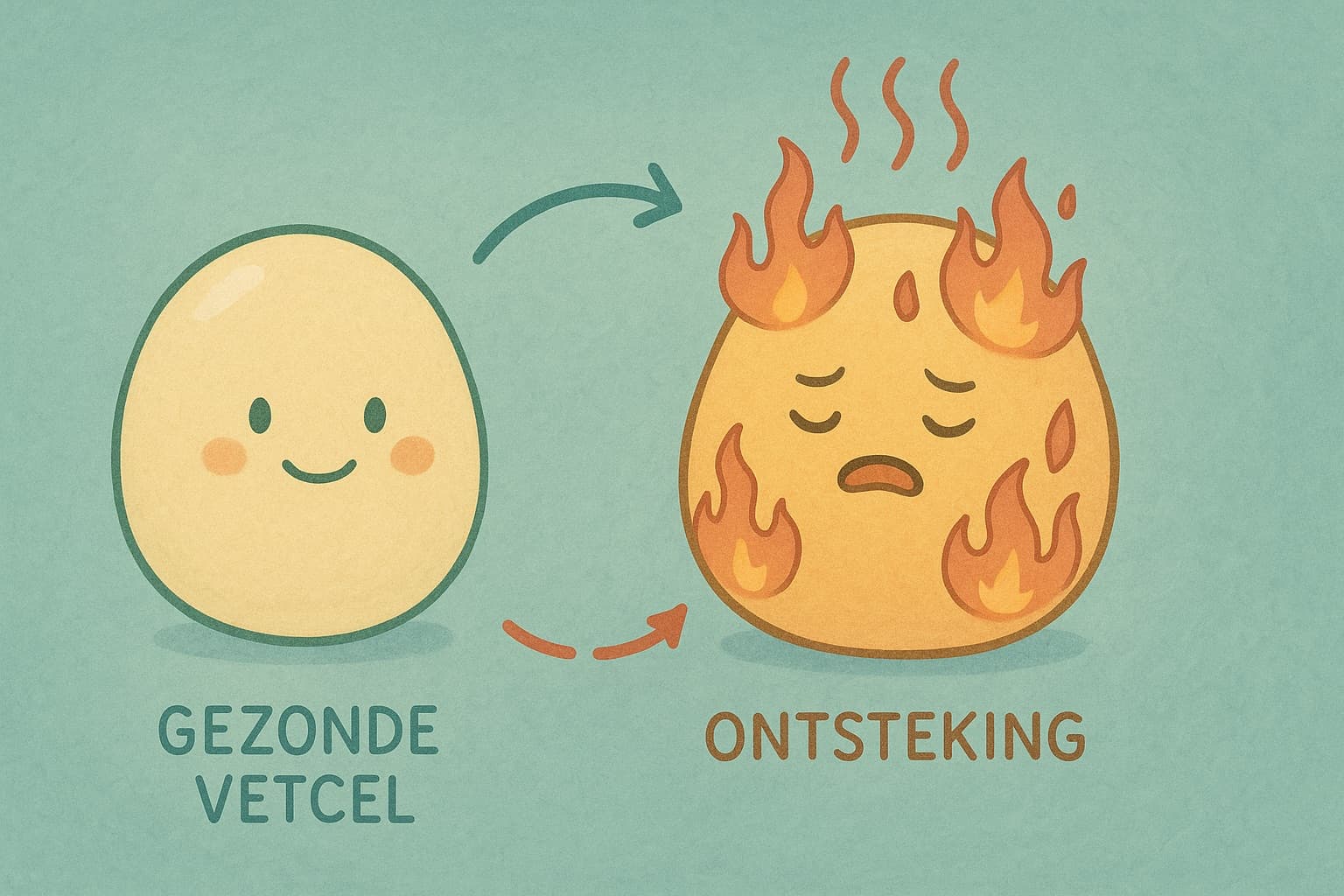
Ontsteking en obesitas: waar start de vicieuze cirkel?
Een diepgaande blik op de complexe relatie tussen obesitas en chronische ontsteking, hoe ze elkaar versterken, en hoe leefstijl en nieuwe behandelingen zoals GLP-1 medicatie deze cirkel kunnen doorbreken.